
Tigers: The Striped Kings of the Wild
A Giant Among Cats
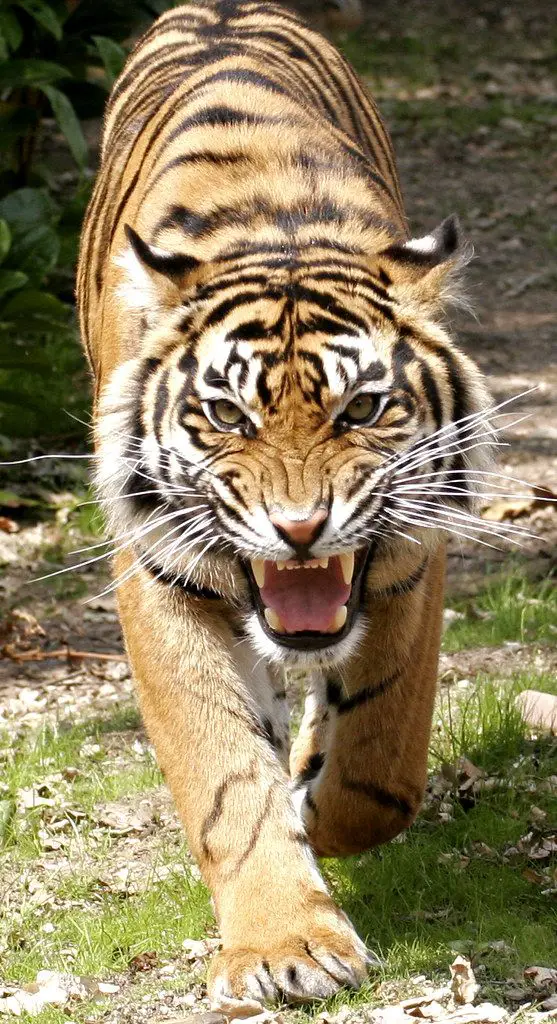
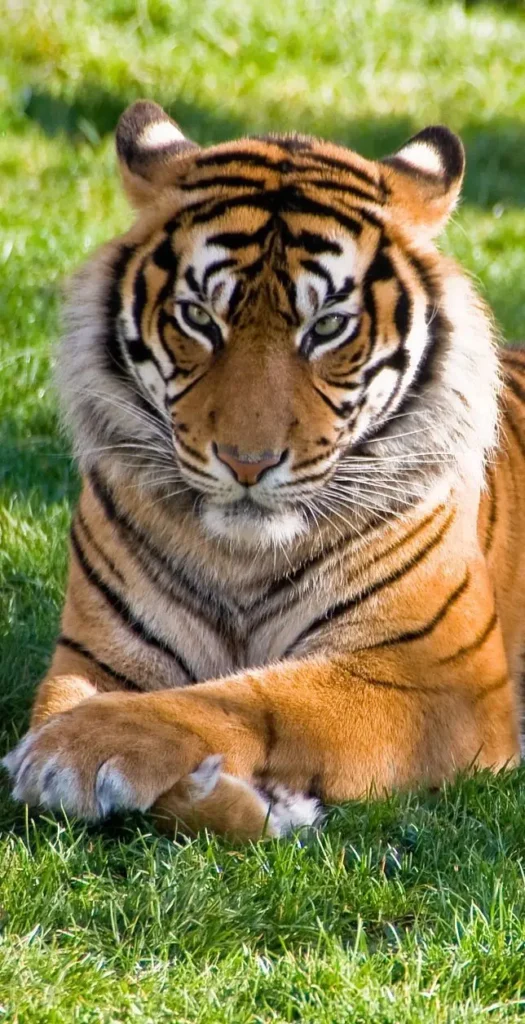
The tiger (Panthera tigris) is the largest living cat species. Adult males can grow to over 3 meters long and weigh up to 300 kilograms, with the biggest subspecies reaching even more. No two tigers share the same stripe pattern, which makes each animal as unique as a human fingerprint. Those stripes aren’t only on the fur either: the skin underneath is striped too.
A Brief History: How Tigers Came to Be
Tigers have walked the earth for a very long time. Fossil and genetic evidence suggests that the Panthera lineage, which includes lions, leopards, jaguars and tigers, began diverging from other cats several million years ago. The tiger’s own lineage is thought to have emerged in Asia, with early tiger-like fossils found in China and Java dating back over a million years.
From there, tigers spread across the continent. At their peak, they roamed from the snowy forests of the Russian Far East to the tropical jungles of Indonesia, and from Turkey and Iran across Central Asia to India and China.
Tigers in Human Culture and Discovery
Tigers were never really “discovered” the way a new species is found, because the people of Asia lived alongside them for thousands of years. They appear in ancient art, myths and traditions across the continent. In China, the tiger symbolizes courage and power and is one of the twelve zodiac animals. In India, it is the national animal and is linked to the goddess Durga. Cave paintings and ancient seals from the Indus Valley show tigers too.
For the Western scientific world, the tiger was formally described in 1758 by Carl Linnaeus, the Swedish naturalist who created the modern system of naming species. He gave it the name Felis tigris, which was later changed to Panthera tigris. European explorers and colonial travelers had already sent back accounts of the great striped cat, often with a mix of awe and fear.
Where Are Tigers Found Today?
Tigers now live only in Asia, and in a fraction of their former range. Wild populations are found in:
- India: home to the majority of the world’s wild tigers, including the Bengal tiger, found in reserves like Ranthambore, Kaziranga and Jim Corbett.
- Russia: the Siberian (Amur) tiger lives in the cold forests of the Far East.
- Nepal and Bhutan: Himalayan foothills and lowland forests.
- Bangladesh and India: the Sundarbans mangrove forest, where tigers are famous for swimming.
- Southeast Asia: Thailand, Malaysia, Myanmar and Indonesia, where the Malayan and Sumatran tigers survive.
- China: very small populations remain.
Tigers are adaptable and can live in tropical rainforests, grasslands, mangrove swamps and snowy forests, provided there is enough prey and cover.
The Subspecies
Several subspecies have been recognized, including the Bengal, Siberian, Indochinese, Malayan and Sumatran tigers. Sadly, three others, the Bali, Javan and Caspian tigers, went extinct in the 20th century.
A Story of Decline and Hope
About a century ago, an estimated 100,000 tigers roamed the wild. By the early 2010s, that number had crashed to around 3,200 because of poaching, habitat loss and conflict with people. Since then, conservation efforts, including the global “Tx2” goal to double wild tiger numbers, have helped populations recover in some areas. Estimates today are around 4,500 or more, with India leading the recovery.
Why Tigers Matter
Tigers are apex predators, so they keep prey populations in balance and maintain the health of whole ecosystems. Protecting tigers means protecting forests, rivers and the communities that depend on them.
Final Thoughts
The tiger’s story is one of ancient power, cultural reverence and a close brush with disappearance. Whether through supporting conservation groups, choosing responsibly sourced products or simply spreading awareness, each of us can help make sure these striped giants continue to prowl the wild for generations to come.