

Discovering the Indian Ocean: Warm Waters, Ancient Trade and Island Wonders
The Warmest of the World’s Oceans
The Indian Ocean is the third-largest ocean on Earth, covering about 70 million square kilometers, roughly a fifth of the planet’s ocean surface. It is bordered by Africa to the west, Asia to the north, Australia to the east and the Southern Ocean to the south. It is also the warmest ocean, and its tropical waters shape the climate of billions of people.
Its most famous feature is the monsoon, the seasonal wind system that reverses direction each year. For thousands of years, sailors timed their journeys by it, and today it still brings the rains that farmers across India, East Africa and Southeast Asia depend on.
A Brief History: The World’s First Highway
Long before Europeans arrived, the Indian Ocean was one of the busiest trade networks in the world. Arab, Persian, Indian, Swahili and Southeast Asian sailors crossed it in wooden dhows, carrying spices, gold, ivory, cotton, pearls, porcelain and enslaved people between East Africa, Arabia, India and beyond.
Early civilizations such as the Indus Valley people were trading by sea thousands of years ago, and ancient Egyptians sent expeditions down the Red Sea to the land of Punt. Over time, port cities like Kilwa, Mombasa, Zanzibar, Muscat, Calicut and Malacca grew wealthy and cosmopolitan.
Discovery and Exploration
For the people living around it, the ocean was never a place to be “discovered.” It was home and highway. For Europeans, the story begins in 1498, when Vasco da Gama sailed around the southern tip of Africa and reached India with the help of a local pilot who knew the monsoon routes, opening a direct sea route from Europe to Asia.
Portuguese, Dutch, British and French powers then competed for control of ports and trade, reshaping the region through colonial rule. Earlier, Chinese admiral Zheng He had led enormous fleets across the Indian Ocean in the early 1400s, reaching as far as the East African coast, long before European ships dominated these waters.
Where Is the Indian Ocean?
The ocean touches dozens of countries and includes several important seas and gulfs:
- East Africa: Kenya, Tanzania, Mozambique and Somalia, with historic Swahili Coast towns such as Lamu, Mombasa and Zanzibar.
- The Arabian Sea and Persian Gulf: connecting Oman, the UAE, Iran, Pakistan and India.
- The Bay of Bengal: bordering India, Bangladesh, Myanmar and Sri Lanka.
- Southeast Asia and Australia: including the coasts of Indonesia, Thailand and Western Australia.
- Island nations: the Maldives, Seychelles, Mauritius, Madagascar, Comoros and Sri Lanka.
Island Wonders
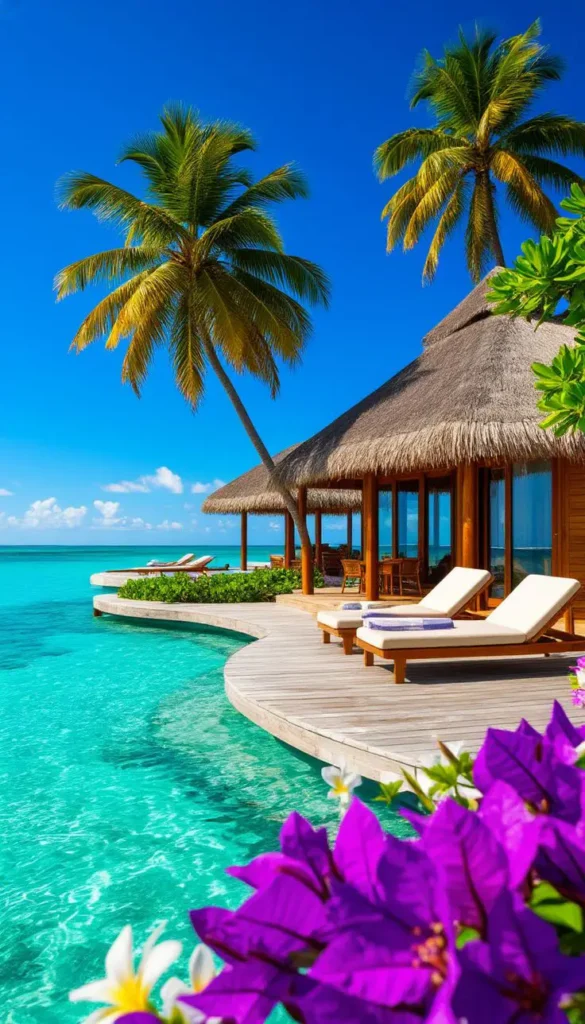
Madagascar, the fourth-largest island in the world, is home to lemurs and many other animals found nowhere else. The Maldives is famous for coral atolls and turquoise lagoons, while Seychelles has granite boulders and rare giant tortoises. Zanzibar combines spice plantations with the winding alleys of Stone Town, a UNESCO World Heritage site.
Marine Life
The Indian Ocean is rich in biodiversity. Coral reefs shelter thousands of fish species, and the waters host whale sharks, manta rays, dugongs, sea turtles, dolphins and humpback whales. Every year, humpbacks migrate along the East African coast, and diving, snorkeling and whale watching are popular in places like Watamu, Diani and Zanzibar.
The ocean also contains deep trenches, such as the Java Trench, its deepest point at over 7,000 meters.
Culture Along the Coast
The Indian Ocean world produced blended cultures. The Swahili language and culture of East Africa combine African, Arab and Persian influences. Food reflects the same mixing, with coconut, rice, cloves, cardamom, cinnamon and pepper appearing in dishes from Kenya’s coast to Sri Lanka and Indonesia. Dhows, spice markets, carved wooden doors and coastal architecture all speak of centuries of exchange.
Threats and Conservation
The ocean faces serious challenges:
- Coral bleaching caused by rising sea temperatures
- Overfishing, including illegal and unregulated fishing
- Plastic and oil pollution
- Rising sea levels, which threaten low-lying islands like the Maldives
- Cyclones and storms that may be intensifying with climate change
Marine protected areas, community-managed fisheries, coral restoration projects and cleanup campaigns are helping, and many coastal communities now lead conservation efforts because their livelihoods depend on a healthy ocean.
Final Thoughts
The Indian Ocean is a place where geography, history and culture meet. It carried trade, faiths, languages and flavors across continents long before the modern era, and it continues to shape the lives of millions today. Visiting its shores or simply learning its story reveals a world that has always been connected, and one worth protecting.